


Time for TEFAF
 “The fair has a very wide audience with very wide pockets.” Jamie Ede, the FT
Meetings finished, I detoured past the MECC to watch the art collectors arriving. Orange and white cones separated the limousines from the commuters on the Ring Road, diverted them down a clear corridor free of traffic. Red-jacketed valets pulled open doors and touched white-gloved hands to their top hats and smiled broadly.  Well dressed couples, mismatched ages, emerged, squinted into the sunlight, stepped onto the carpets.
I edged closer for a picture and a better look, dodging hurtling towncars. No tourists, shouted one parked driver, waving me off with his hand over his head. I smiled and took the picture.
The 0.1% have arrived for The European Fine Art Fair.
 I actually enjoy the annual show and the bustle of events around it, red flags deployed around town. TEFAF showcases the best in paintings, sculptures, collectables, antiquities, and drawings from around the world. Ordinarily, these works are out of sight in private collections, but for two weeks they become visible as they exchange among galleries and patrons. I like the energy of the whole ecosystem , detailed in Sarah Thornton’s book 7 Days in the Art World, which encourages the production of high-quality creative works and rewards the best artists.
In contrast, two commercial arts outlets are in trouble elsewhere in town.
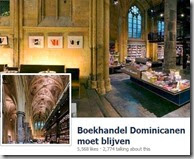 The Dominicanen Bookshop, housed in a landmark church nave in the center of town, is closing because its corporate parent, Polare, has filed for bankruptcy. “Dominicanen gaat door; jij kunt helpen!” (Dominicanen goes on; you can help! with a purchase, a donation, a visit. The owner of Paradigit, a computer retailer, has rescued the Eindhoven store, and there are hopes for a similar rescue in Maastricht.
“As the situation became more precarious, we explore continuing as an independent bookstore…your heartwarming support helped us a lot and therefore we dare to ask you to help us make
a go around,” pleads the store manager.
Across the river, the local movie house, the Pathe Maastricht, has similarly announced its plans to close. There are hopes that it will be re-opened by the Belgian Euroscoop cinema chain.
Both announcements have spawned Facebook groups hoping to save the institutions with thousands of Likes.
Two sleek, gleaming towncars parked in front of my apartment building. Bert at le Cle tells me that a  directeur from The House of Dior has arrived for dinner at the restaurant downstairs. In Markt Square, the city hall glows with lights and music from the formal reception underway inside.
Do private collectors motivate and protect works that would otherwise never reach public exhibition? Can public arts venues survive without private patronage?
This balance and dynamic are on display across Maastricht this evening. It’s a funny world, limousines and Facebook pages, the ways the money flows and the arts subsequently evolve.
The depth of life
 ‘’So, basically, you’re an international man of leisure, just without the money nor the leisure?’
I’m catching up with all of my Dutch / expat friends, six weeks away from the Netherlands and everyone is curious. ‘Grazing the trees whilst flying the business,’ I tell colleagues over a biertje; ‘Finding a new beach rental in Dorset,’ I tell friends over koffie.
Like the blind men an the elephant, everyone gets an honest bit of the whole.
 I’m relaxing back into Maastricht, day by day. Yesterday was a long-overdue catch-up with a dear friend; I joined another happy in their promotion at work, and listened to another worried about their medical prognosis.
It’s all reconnecting with the warp and woof forming the fabric of everyone’s lives. More than sitting by the river in warming weather or exploring the new restaurants and pubs along the ‘skade, these connections define everyday life, create richness and value in my Dutch relationships.
Have you considered moving on? Although I was away a long time, “No”. The connections, the memories, the people are the greater reason to stay.
Booking.com wrote to say that after analyzing my travel habits, they had determined that my ideal break included:

Maybe they know me better than I know myself, but I’d have said that I like touring (driving long distances), rustig (relaxation), and cultural landmarks (art).
 My 60th is fast approaching, a landmark birthday with high expectations (beyond simply getting freebie-passes on public transport) .
Plan A (A big party in Sicily) and Plan B (A big party in the US) have fallen through, so I’m reverting to Plan C (an excursion to a memorable location).
I remember 50, oude jenever shared with colleagues in Amsterdam; I intend to mark the decade in passing, without stopping
 I lie in during the pre-dawn hours, reading quietly. “Have you missed out on living life amazingly?” challenged Raymmar on Medium.
- Have you failed enough? Do you choose not to try?
- Do you care too much what others think? Do you care about the stuff you have more than the things you’ve done?
- Do you believe you’re smarter than you are? Do you learn from life?
- Do you read? Do you learn from other’s lives?
- Do you lack curiosity? What if its all a lie?
- Do you ask enough questions? Of yourself?
- Can you handle the truth? Admit that you don’t know what you don’t know?
I’m nowhere near perfect, but I do pretty well on this quiz.
If anything, my weak spot in this is vanity: overestimating my abilities (as opposed to my (unremarkable) looks or (insubstantial) worth). Many of my mistakes stem from firm assurance that I can accomplish or fix almost anything. The reality can leave me stressed; criticism can make me defensive. But I’m getting better, becoming both more realistic and less ambitious.
 David Brooks had a wonderful perspective on the personal journey, one he characterizes as seeking depth.
When we say that someone is a deep person, we mean they have achieved a quiet, dependable mind by being rooted in something spiritual and permanent.
Depth, the core of our being, is something we cultivate over time. We form relationships that either turn the core piece of ourselves into something more stable and disciplined or something more fragmented and disorderly.
Depth is built through freely chosen commitments and enduring the sacrifices those commitments demand. Depth is built by fighting against natural predispositions.
Depth is achieved when people discover they are not what they appeared to be.
I strive for success and happiness, to make a difference and share a life. And, in Brooks’ “core wounds and the core loves”, I recognize something more.