We spent the day riding bikes through the tulip fields in Lisse, north near the Keukenhof Gardens, and enjoying the Bloemencorso Bollenstreek. It was a cloudy day, not the best light for taking photographs, but the rain cleared in time for the flower parade. Young and old filled the bands and floats; there were debates about the number and quality of this year’s displays compared to others. But it was a nice community event: I wonder if it’s also the type that may not survive the passing of another generation.
Spring quest: Vermeer Gouda
Winter finally broke grip over Europe this week. Friends tell me the trees are flowering in Cambridge, the umbrellas are similarly blossoming along the Maas. People are noticeably less bundled up in Maastricht (I’ve taken to wearing a vest over a polo when bike riding) and sunglasses are starting to reappear. It’s a shame that I have to stay inside to work, but I’m opening the windows to get some light and air through the apartment.
The world also seems to be stirring: our daughter is full of news about her upcoming college graduation, TEFAF is underway bringing the art world to Maastricht, our clinical trial sites are sending great results back from the US, our fundraising round in the UK is closing with a 20% oversubscription.
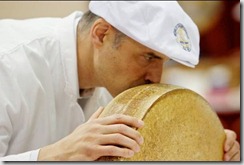
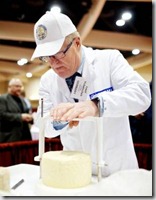
And a Dutch cheese has won the World Champion Cheese Contest.
This one came from my parents, who still clip newspaper articles and post them all the way to Kesselskade for me. (I should do an essay on that vanishing practice as well – it’s nice to get a neatly trimmed and occasionally underlined bit of news from the local paper!)
DUTCH CHEESE REIGNS SUPREME, gushed the AP. The annual event drew 2,000 entrants from 24 countries and the results are highly regarded among cheese aficionados. The Swiss or the Wisconsin Germans usually win these contests (no mention of the French). But this year, the low-fat Gouda Vermeer, took the prize. It comes from the FrieslandCampina company in Wolvegna (I had to look it up: it’s on the A22 south of Leeuwarden).
Since the company didn’t have a representative at the event: the judges woke up Piet Nederhoed, the plant manager, at 1 am Dutch time to tell him the good news.
I got him out of bed so he was a little quiet, but then he got very excited. said Dutch judge Peter Piersma. Having called the Dutch after hours, I can attest that this is their usual reaction.
The problem now is to find the stuff: I’m snuffling around the local Albert Heijn and the specialty shops of the Wycker Brugstraat but no luck yet. I’m in Amsterdam on Monday – any suggestions for a sop that might have it to take back to Colorado?
And the quest is a good excuse for wandering around in the sunshine.
Vermeer’s Women
Johannes Vermeer was a Dutch painter active in Delft in the mid-1600’s; he captured everyday, domestic scenes characterizing middle-class life of the Golden Age. Het Meisje met de Parel is probably his most recognized work, but thirty-four authenticated paintings have been catalogued into museums. Four of those (including The Lacemaker, right), along with two dozen associated works by artists of the same period, are collected in Vermeer’s Women, a free exhibition at the Fitzwilliam Museum in Cambridge (UK). It’s a short train ride north from London and a worthwhile detour if you are interested in everyday Dutch life as depicted by a variety of painters contemporary with Vermeer.
The paintings center around women at work in the home. Tradesmen bring their wares to the front hall (voorhuis) for sale; servant girls offer selected items to the wife living in the personal spaces at the back, interrupting her
sewing. There are scenes of women lost in their reading of books and letters, leaning from windows to talk with friends, attending to morning or evening dressing (left is Jan Steen, Woman at her Toilet).
As with many Dutch paintings, these often seem dark and brooding, dim settings rendered in melancholy blacks and yellows. I don’t know if that is realism from the time (large wooden rooms lit by candlelight, with few windows), aging of the paints, or the influence of Rembrandt. The women look luminous within the pictures, porcelain skin and satin clothes, all finely rendered in bright colors as compared to the flat textures of objects in the rooms. The accompanying text does a good job of describing the
narrative symbolism of objects in the rooms, and of the conventions of household layout and management in the 1600’s (right is Jacobus Vrel, Woman at the Window, exchanging glances with a young girl who might be outside or might only be a reflection).
The pictures, to me, suggest a very solitary life. The rooms have few furnishings apart from plates above the hearth, a chair and a table and lots of empty floors. The women seem lost in their own work, seldom talking or making eye contact with one another or the viewer, often turned away. Children are more often seen entreating distant mothers than playing with them. The technique and use of colour is lovely, though, and there is lots to reflect about Dutch life both then and now.
The exhibition runs through mid-January. Lines were long leading into the exhibition but they moved quickly. Once inside, the best strategy to is drift between paintings: the crowd flows in knots and it’s easy to dip into the gaps and see everything without waiting for each work in turn.
For details on Vermeer’s life, works, and upcoming events highlighting his work, I like The Essential Vermeer, a well constructed and actively maintained web resource.